 Dejan Kosutic
Most new consultants make the same mistake: They try to serve everyone. They list every skill they’ve ever used, every framework they’ve ever touched, and every industry they’ve ever worked in. The result is predictable — they blend into a sea of identical consultants offering identical services while reducing their chance to find new clients.
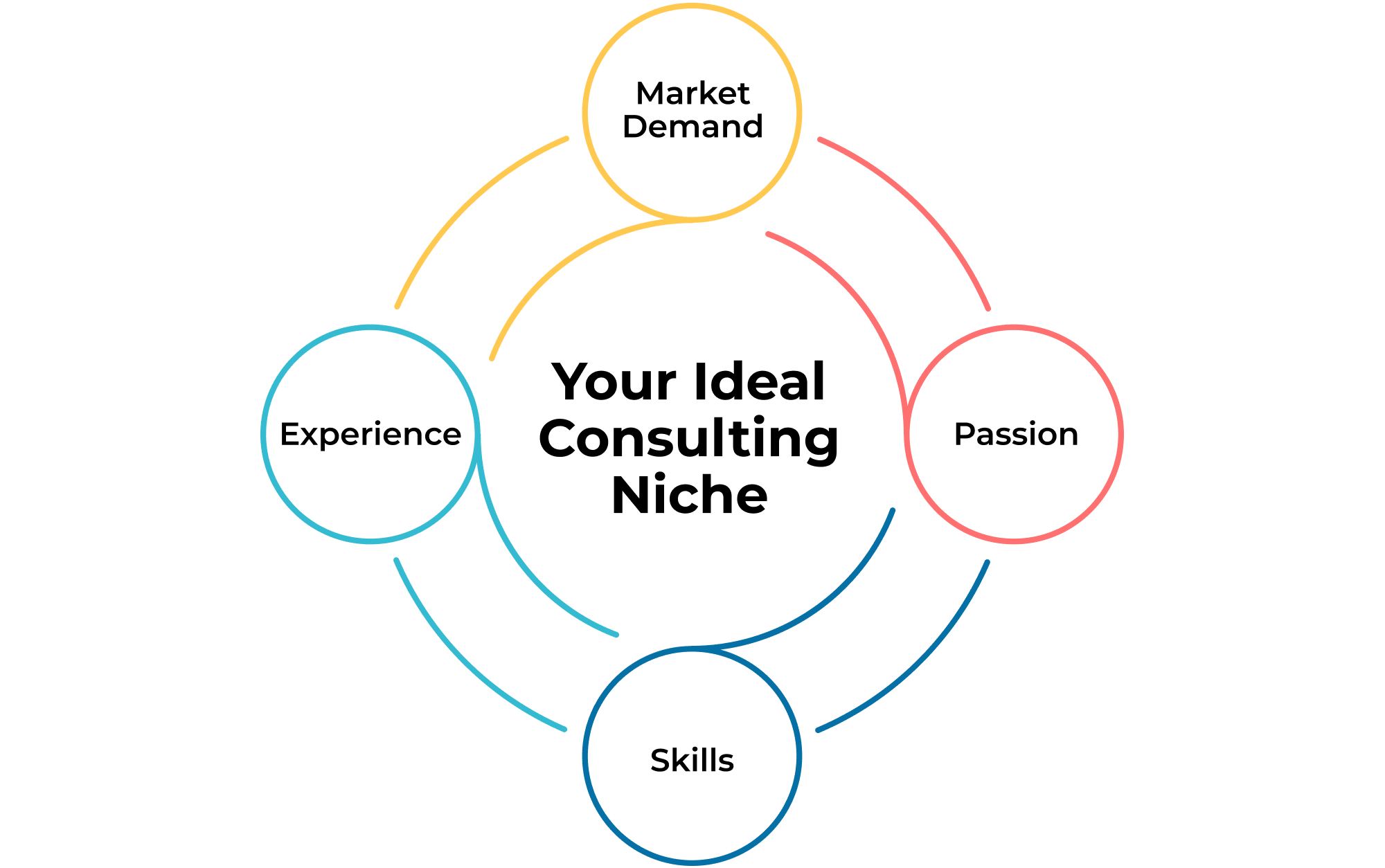
A strong consulting niche is the intersection of your experience, skills, market demand, and personal interest. By narrowing your focus to a specific industry, technology, or regulatory area, you reduce competition, increase perceived value, and make it easier for clients to understand why they should hire you instead of a generalist. Defining a niche is the fastest way to stand out, win clients, and build a sustainable consulting business.
Imagine a potential client searching for help with ISO 27001. They find thousands of consultants who all look the same. Why would they choose you? Without a clear niche, they won’t.
Defining a niche isn’t about limiting your opportunities — it’s about making it obvious why you are the right choice for a specific type of client. In a crowded consulting market, clarity is your competitive advantage.
Why a niche matters more than ever
Competition in consulting is intense. Whether you work in cybersecurity, quality management, data protection, or governance frameworks, you’re competing with freelancers, boutique firms, and global consultancies. Without a niche, you’re just another generalist — and generalists are easy to replace.
A niche helps you:
- Reduce competition by focusing on a smaller, underserved segment
- Increase your value because clients see you as a specialist
- Win projects faster since clients trust expertise over broad claims
- Market yourself more effectively with targeted messaging
- Build credibility through repeated success in the same domain
A niche is not a constraint — it’s a multiplier.
Start with your strengths and experience
Your niche should begin with what you already know. This is the simplest and most reliable way to differentiate yourself.
Look at your career and ask:
- What industries have I worked in?
- What technologies, processes, or regulations do I understand deeply?
- What problems have I solved repeatedly?
- What do colleagues naturally ask me for help with?
For example, here’s how I started as an ISO 27001 consultant. I had something most didn’t: I had worked in a bank, and I understood how banking operations worked from the inside. Around that time, the central bank in my country introduced strict cybersecurity rules for financial institutions, and I saw an opportunity.
I began offering ISO 27001 consulting specifically tailored to help banks comply with those new cybersecurity requirements. Because I had both knowledge about cybersecurity governance and firsthand banking experience, it was easy for clients to see the value in hiring me. I wasn’t just another consultant — I was someone who spoke their language and understood their pain points.
And this is the power of combining domain experience with a technical or regulatory framework. It’s not about being the best ISO 27001 expert in the world — it’s about being the best ISO 27001 expert for a specific type of client. That’s what makes you competitive.
Here are some more examples of niches based on your individual strengths:
- A former manufacturing engineer → ISO 9001 for specialized production environments
- An IT administrator → cybersecurity consulting for specific technologies
- A medical device specialist with an interest in AI governance → ISO 13485 combined with emerging AI requirements
Your background is not a limitation — it’s your competitive edge.
Analyze market demand
Your niche must also align with real demand. Even if you’re highly skilled in a particular area, it won’t help if the market is shrinking or saturated. Here are a couple of things you should look for.
Growing regulatory requirements. Regulations create predictable consulting demand. For example: EU AI Act, ISO 42001 (AI governance), NIS 2 Directive for critical infrastructure companies, DORA for financial entities, etc.
Highly competitive and regulated industries. Some sectors face stronger compliance expectations than others, and are also in a very competitive market where they have to show value for their clients. Examples include banking and finance, healthcare and medical devices, critical infrastructure, and cloud and SaaS providers. If you have experience in any of these, you’re already ahead.
Underserved segments. Sometimes the best niche is where no one else is looking. For example:
- Small manufacturers needing ISO 9001
- Startups preparing for SOC 2 or ISO 27001
- AI startups needing governance frameworks
- Local companies facing new national regulations
A niche is strongest when demand is rising and competition is still low.
Study your competitors — then position yourself differently
Once you identify a potential niche, analyze who else is serving it. The goal is not to copy them, but to find a position they haven’t taken.
Ask:
- What services do they offer?
- How do they describe their expertise?
- What industries do they target?
- What is missing from their approach?
Your positioning should make it obvious why a client should choose you instead of them.
For example, if you’re an engineer with deep knowledge of a specific manufacturing process, your value proposition might be:
“I’m the only consultant who has worked directly with this technology and production method. I can implement ISO 9001 in your company faster and with fewer disruptions than other consultants.”
This is clear, specific, and compelling — exactly what clients want to hear.
Combine skills, market demand, and passion
A niche is strongest when it sits at the intersection of (1) your experience, (2) your skills, (3) market demand, and (4) your long‑term interest.
And regarding this last point: Passion matters more than people think — after all, you will spend years building credibility in your niche. If you choose a field you don’t enjoy, you’ll burn out before you become competitive.
For example, if you love AI, you have experience in medical devices, and the market is moving toward AI governance in healthcare, then ISO 13485 + ISO 42001 could become a powerful, differentiated niche.
This is how strong consulting niches are born — through intentional combination, not guesswork.
Validate your niche through real projects
You won’t know if your niche is truly viable until you test it. The first few projects will tell you whether clients understand your value, whether the market is willing to pay, and whether you can deliver results efficiently — and of course, if you enjoy this kind of work.
So after a few engagements, reassess:
- Is this niche sustainable?
- Do I want to deepen my expertise here?
- Should I narrow or broaden the focus?
Niche definition is not a one-time decision; it’s an iterative process.
How to position yourself clearly within your niche
Once you choose your niche, you must communicate it in a way that resonates with clients. Your value proposition should answer one question: “Why should a client hire me instead of another consultant?”
Strong positioning should include a specific industry or other focus, a unique combination of experience and skills, and a clear promise as to what kind of benefit this brings to clients.
For example, “I help mid-size manufacturers implement ISO 9001 using my 10 years of hands-on experience with the exact production technologies they use to reduce the time needed, costs, and overhead of compliance” is far more effective than “I provide ISO 9001 consulting.”
Clarity wins.
The bottom line
If you want to be competitive as a consultant, you cannot be everything to everyone. The consultants who succeed are the ones who choose a niche, position themselves clearly, and build credibility through repeated success in a focused area.
The two points to remember are:
- Your niche is the intersection of your strengths, market demand, and long‑term interest.
- Clear positioning makes it easy for clients to choose you over your competitors.
Define your niche intentionally, and you’ll build a consulting business that is not only competitive, but truly sustainable.
To learn how to launch your consultancy, sign up for this free online Advanced Course for ISO, Cybersecurity, and AI Consultants that will explain how to define your niche and excel in your consulting business.