 Dejan Kosutic
Probably the biggest challenge for new consultants is finding their first clients. Without a paying client in the first few months, your consulting business risks stalling before it ever gets going.
This is the pain point that matters most: not visibility, not branding, but traction. You need someone to say yes. Not someday — now. And that means shifting from preparation to action. In this article, we’ll walk through the exact steps that help new consultants land their first client quickly and ethically. No theory, no guesswork — just what works.
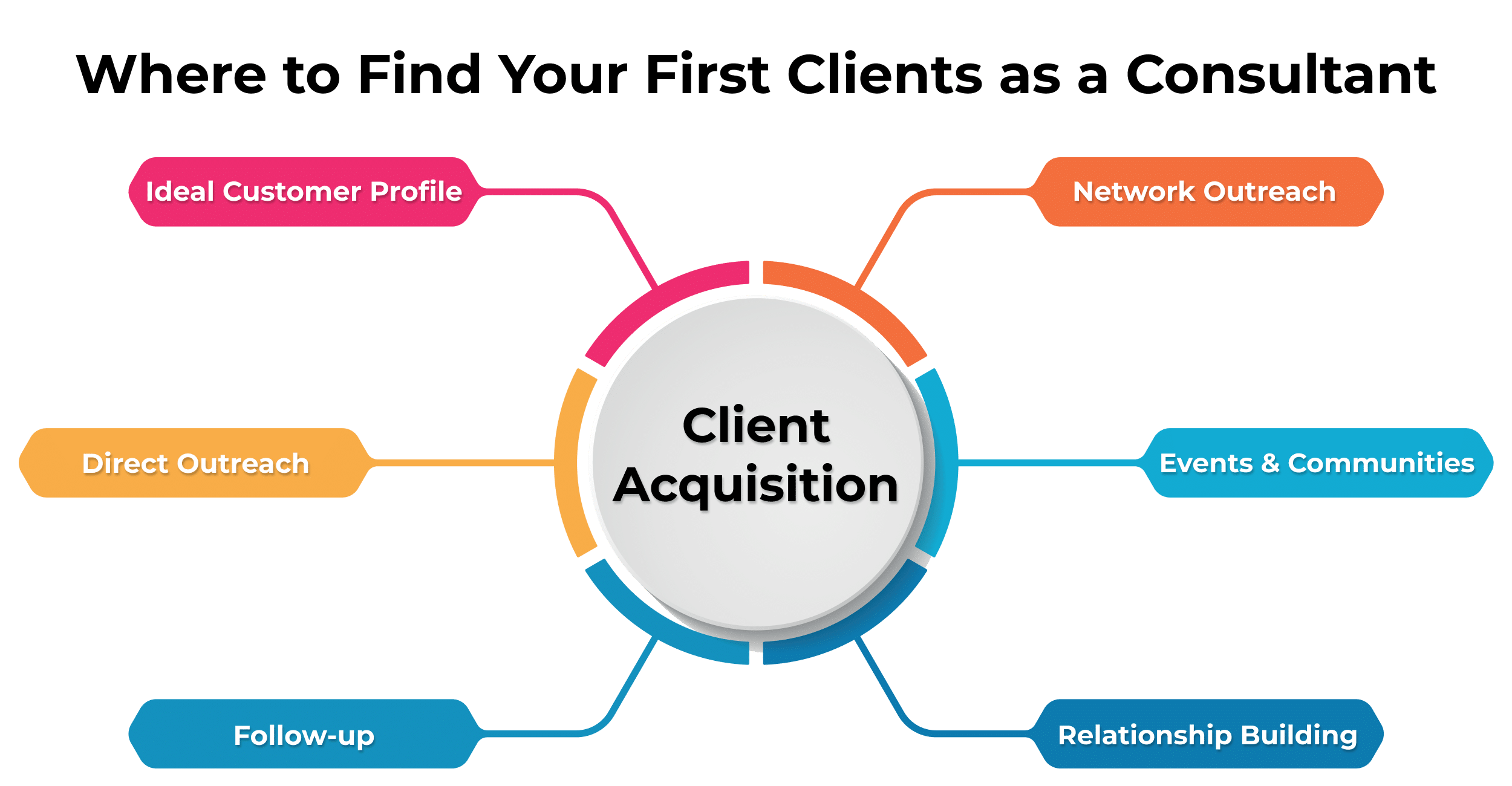
The fastest way to find your first consulting clients is through direct, highly targeted outreach: Define a precise ideal customer profile, contact people already in your network, and use short, personalized messages on email, LinkedIn, and phone that address real pains and propose a clear next step.
Define your ideal customer profile
Before you contact anyone, you need absolute clarity about who you’re trying to reach. This goes far beyond choosing a niche. It means identifying the exact type of company, the exact roles inside those companies, and the exact pains those people experience.
For example, instead of saying you help “tech companies that might be interested ISO 27001,” you might narrow it to, e.g., SaaS companies with 50–100 employees, and within those companies target decision-makers who are typically CTOs or Heads of IT.
Then you have to figure out what the pains of those people are; e.g., they often struggle with the same set of problems: They don’t know which documents are required, how long certification takes, what it costs, or what the auditors expect. When you understand these pains in detail, you can speak directly to them — and that’s what makes outreach effective.
This clarity also helps you search for prospects, filter LinkedIn results, brief your network, and craft messages that feel relevant rather than generic. Without a precise ideal customer profile, everything else becomes guesswork.
Start with the network you already have
Your first clients rarely come from strangers. They come from people who already know you — or from people who trust those people. This is why your existing network is the fastest path to early revenue.
Go through your email history, your phone contacts, your LinkedIn connections, and even your social media accounts. Make a list of anyone who might know someone in your target audience. Then reach out and explain clearly what you’re looking for. Most people won’t know how to recommend you unless you guide them, so give them a short script they can use, and add a simple description of your ideal client.
If you’re transitioning from employment to consulting, start this process before you leave your job. Just make sure you do it ethically: outside working hours, without targeting your employer’s clients, and without creating conflicts of interest. Securing your first contract before you resign makes the transition dramatically easier.
Use direct outreach: Email, LinkedIn, and phone
Direct outreach is the fastest way to get clients. Branding, content, and reputation-building matter later, but they take time. When you’re starting out, you need conversations — and conversations come from proactive contact.
The key is to keep your messages short, personal, and focused on the other person’s pain. A generic message like “I offer ISO 27001 consulting” will never work. Instead, speak to the problem they’re trying to solve. For example, you might explain that you help SaaS companies get certified in a predictable timeframe so they can close enterprise deals faster. That’s a concrete benefit, not a vague service description.
Every message should also include a clear next step. You might suggest a short call, offer to send a checklist, or propose a quick overview of the certification timeline. The point is to make it easy for the other person to respond.
And expect your first attempts to fail. Outreach is iterative. You’ll refine your message, adjust your call to action, and personalize more deeply as you learn what resonates. After a few rounds of improvement, your response rate will rise.
Use LinkedIn Sales Navigator for precision targeting
LinkedIn’s Sales Navigator (a paid tool) is one of the most effective tools for consultants because it allows you to search for prospects with remarkable accuracy. Instead of guessing who might be a good fit, you can filter by industry, region, company size, and job title, which means you can quickly build a list of people who match your ideal customer profile. This level of precision saves time and ensures your outreach goes to people who are actually in a position to hire you.
Another advantage is the ability to contact people outside your immediate network. Sales Navigator gives you access to decision-makers you wouldn’t normally reach, allowing you to send direct messages even if you’re not connected. When combined with a clear value proposition and a well-defined ideal customer profile, it becomes a powerful way to start conversations with exactly the right people.
Go where clients are already looking
If you don’t yet have referrals, you can still find clients by going to platforms where people actively search for consultants. Sites like Upwork won’t bring high revenue at first, but they’re valuable for understanding what clients ask for, how they describe their problems, and what they’re willing to pay for. You can also list yourself in directories, such as Advisera’s consultant directory, which helps potential clients find you when they search for ISO or cybersecurity expertise.
These channels won’t replace outreach, but they can supplement it and give you early exposure.
Identify where demand originates
A powerful strategy is to look upstream — to the organizations that create demand for your services. Large companies often require their suppliers to comply with standards like ISO 9001, ISO 27001, or ISO 14001, and those suppliers frequently struggle to meet these requirements quickly.
This approach works best when you reach out to the purchasing or vendor management departments of those large companies and explain that you can help their suppliers comply faster and more efficiently. In some cases, these departments will be happy to recommend a consultant who can reduce delays and improve supplier performance. It’s a steady source of warm leads that doesn’t rely on advertising or cold outreach alone, and it often leads to clients who are already motivated to act.
Participate in online communities
Online communities are an overlooked but powerful place to build visibility and trust. Platforms like Reddit, LinkedIn groups, and specialized forums are full of people asking practical questions about compliance, cybersecurity, and AI governance. When you take the time to answer thoughtfully and clearly, you demonstrate expertise in a way that feels natural and helpful rather than promotional. People remember the person who gave them a useful answer when they needed it.
The key is to participate consistently and with genuine intent. If your responses are focused on solving problems rather than selling services, community members begin to see you as a reliable expert. Over time, some of them will reach out privately for paid help, and those conversations often turn into strong, long-term client relationships. It’s a slow burn, but one that grows through time in your favor.
Attend industry events and conferences
Events are one of the most effective ways to meet potential clients face-to-face. But the value comes from preparation. Before attending, study the agenda, review the list of participants, and identify who fits your ideal customer profile. Prepare a short, clear explanation of what you do and how you help. When you meet someone relevant, you’ll be ready to make a strong impression.
After the event, follow up. Many consultants collect business cards and then do nothing with them. The follow-up is where the real opportunity lies.
Build real relationships, not transactions
Consulting is a trust-based business. Clients don’t buy from people who treat them like transactions. They buy from people who understand their challenges, communicate clearly, and provide value even before money changes hands. This doesn’t mean giving away your entire service for free — it means being helpful, consistent, and human.
Over time, these relationships become your most reliable source of referrals and repeat business.
Be cautious with advertising
Advertising can be tempting when you’re eager to get your first clients, but it rarely works for consultants who are just starting out. Unless you offer something extremely specific and differentiated — something that stands out clearly from every other consultant in your field — paid ads tend to attract the wrong audience or no audience at all. Most early-stage consultants simply don’t have a niche narrow enough or a message refined enough to make advertising cost effective.
In the beginning, your time and energy are far better spent on approaches that rely on personal connection and relevance: direct outreach, networking, and building trust through meaningful interactions. These methods may feel slower, but they consistently produce higher-quality leads and stronger relationships. Advertising can come later, once you have a proven offer and a clear understanding of who responds to it.
Master the follow-up
Most deals are won in the follow-up, not the first message. It’s rare for someone to respond immediately, even if they’re interested. A simple rhythm works well: Follow up a few days after the initial contact, then again after a week or two, and again after a month.
Keep your messages short and polite, and avoid being pushy. Over time, combine your follow-ups with useful content — a blog post, a white paper, or a practical guide. This positions you as a helpful expert rather than a salesperson.
Use advanced techniques when needed
If you have no clients yet, offering a small piece of your service for free — such as a gap analysis or an introductory training — can help you build momentum. Pro bono work for nonprofits can also be strategic, especially if their board includes people who fit your ideal customer profile.
Another advanced technique is forming alliances with consultants who offer complementary services. For example, if you focus on ISO 42001 for AI and another consultant specializes in GDPR, you can collaborate on projects that require both. These partnerships expand your reach and expose you to clients you wouldn’t meet on your own.
Turning outreach into momentum
Finding your first consulting clients isn’t about waiting for visibility or hoping someone discovers your expertise. It’s about taking deliberate, consistent action: Defining exactly who you want to work with, reaching out directly, and following up with professionalism and persistence.
When you combine a precise ideal customer profile with targeted outreach and genuine relationship building, you create the momentum every new consultant needs. The first client is always the hardest to win, but once you do, everything else becomes easier.
Want to start a career as an ISO consultant? Enroll in this free Beginner’s Course for Consultants and learn how to find clients, manage consulting projects, and guide organizations through ISO implementation and certification.